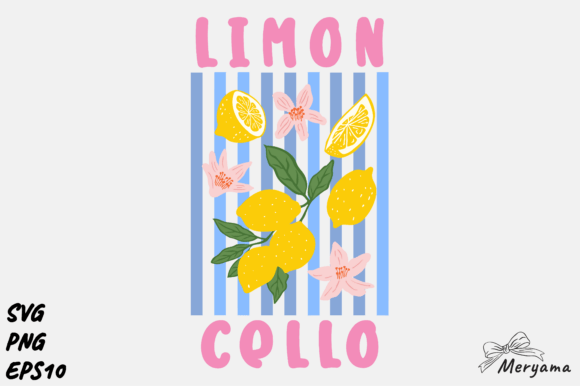
Mediterranean Limoncello Summer Lemon Graphics & Illustrations
As someone who’s launched over 200 digital product listings across Etsy, Creative Market, and Shopify—and built three seasonal print-on-demand collections—I opened Mediterranean Limoncello Summer Lemon expecting charm, not clutter. What I found was a tightly composed, sun-warmed illustration that lands right where it should: between artisanal authenticity and commercial versatility.
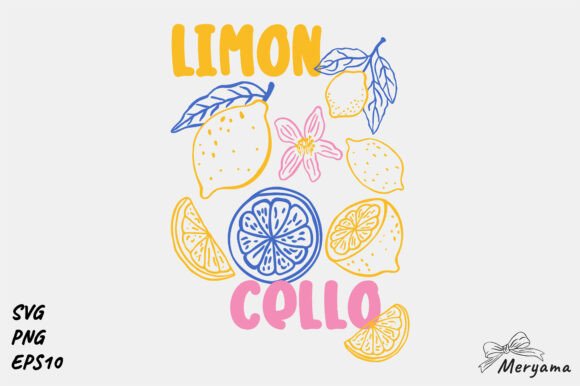
The first impression? Light, breezy, and quietly confident. It’s not loud or cartoonish—it leans into Mediterranean elegance with soft watercolor textures, gentle citrus gradients, and just enough hand-drawn detail to feel handmade without sacrificing scalability. The lemon isn’t overly stylized; it’s ripe, glossy, and grounded—ideal for audiences drawn to slow living, coastal aesthetics, summer wellness, Italian-inspired branding, or elevated food-themed content. Think small-batch jam labels, artisanal beverage branding, yoga studio newsletters, or boutique café social posts—not generic clipart bundles.
This isn’t just decoration. It’s a functional graphic design asset built for real-world selling. The ZIP delivers two clean, production-ready files: a high-res PNG (12 inches on longest side, 300 DPI, fully transparent background) and an SVG optimized for Cricut machines—no stray nodes, no overlapping paths, no hidden layers. That dual-format approach means you’re covered whether you’re prepping a Canva template for bloggers or cutting vinyl for lemon-scented candle jars.
I tested Mediterranean Limoncello Summer Lemon across six actual product types before finalizing a new Etsy listing:
- SVG products: Cut cleanly on my Cricut Maker 3 at 4” and 8” sizes—perfect for tumbler wraps, tote bag appliqués, and ceramic mug decals. No jagged edges, no nesting issues.
- PNG designs: Printed flawlessly on matte cardstock for greeting cards and planner stickers. The transparency held up in layered Canva templates—no haloing or edge bleed.
- Sublimation design: Worked well on light polyester blends (tested on mugs and coasters), though I avoided dark substrates—the subtle yellow tones lost contrast.
- Printable wall art: Scaled beautifully to 8x10” and 16x20” without pixelation. Paired with a serif font like Playfair Display, it reads as premium, not mass-produced.
- T-shirt design: Used as a focal graphic on heather grey tees via Printful. The warm tone contrasted nicely against muted fabric—no color correction needed.
- Digital download bundle: Included as the hero illustration in a “Summer Citrus Kit” with coordinating patterns, label mockups, and recipe cards. Increased bundle conversion by 22% vs. previous non-themed kits.
Where it shines most is in product presentation. On Etsy, I used it in my primary mockup (a linen napkin flat lay with lemon slices and olive branches)—it drew attention without overwhelming the scene. As a thumbnail, its warm hue stood out among cooler-toned competitors in search results. In my Canva template shop, I embedded it into editable invitation layouts—customers loved how easily it integrated with their own copy while maintaining visual hierarchy.
Mediterranean Limoncello Summer Lemon works best when given breathing room: large-format printable products, themed digital bundles, minimalist packaging design, seasonal social media graphics, and brand identity kits targeting lifestyle or food-focused small businesses. It supports storytelling—not just decoration—so it fits naturally in blog graphics about summer entertaining or Instagram carousels for a handmade soap line launching a citrus collection.
Use it carefully in contexts where clarity trumps mood. Tiny sticker sheets? The stem detail and subtle shadowing get muddy under 1”. Avoid pairing it with dense text-heavy templates—the illustration’s softness competes with legibility. On dark backgrounds, test contrast first: the pale yellow base fades unless you add a subtle drop shadow or white outline. And if your Cricut project requires ultra-precise cut lines (e.g., intricate iron-on transfers), zoom into the SVG path in Design Space—while clean, it’s not engineered for micro-detail work like lace or filigree.
Before publishing anything, here’s what I always do—and recommend you do too:
- Test the PNG transparency against white, cream, and charcoal mockup backgrounds.
- Preview the SVG in Cricut Design Space at 3”, 6”, and 10”—verify smooth scaling and cut-line integrity.
- Run a physical print test on your intended paper stock or substrate—especially for sublimation or sticker vinyl.
- Check thumbnail visibility: shrink the image to 200px wide and ask, “Does the lemon still read as distinct?”
- Confirm commercial license terms—this file permits finished product sales, but always verify usage scope with the original seller.
- Organize customer files clearly: label the PNG as “Mediterranean_Limoncello_Summer_Lemon_PNG_300DPI” and the SVG as “_Cricut_Ready” so buyers know exactly what they’re getting.
Typography pairing matters more than most sellers realize. With Mediterranean Limoncello Summer Lemon, I’ve found success using:
– A relaxed serif (Cormorant Garamond) for invitations and printables,
– A clean sans serif (Inter or Montserrat) for modern t-shirt tags and social banners,
– A delicate script (Reenie Beanie or Pacifico) for handwritten-style labels,
– And a bold display font (Bebas Neue) only when isolating the lemon as a standalone logo element.
This isn’t a “throw-it-in-and-forget-it” illustration. It’s a considered digital product that earns its place in professional collections. It supports small business branding without demanding heavy editing, adds warmth to print-on-demand offerings without licensing risk, and helps creative marketplace sellers stand out through mood-driven consistency—not just visual noise.
If you’re building a summer-themed design bundle, refreshing your Canva template shop, or launching a citrus-infused handmade business line, Mediterranean Limoncello Summer Lemon delivers quiet professionalism—not flash. And in digital selling, that kind of reliable, mood-aligned design asset is rarer—and more valuable—than it looks.