Watercolor Lilies Flower Lily Clipart: Graphics & Illustrations for Handmade Brands
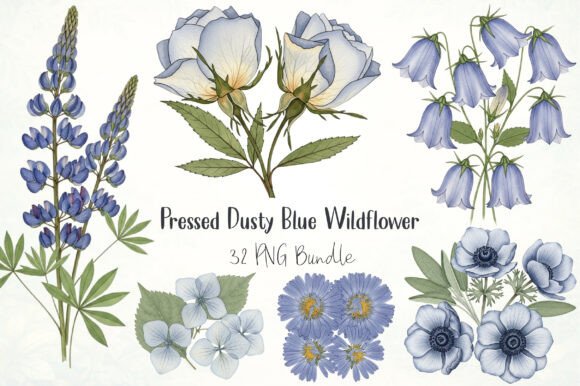
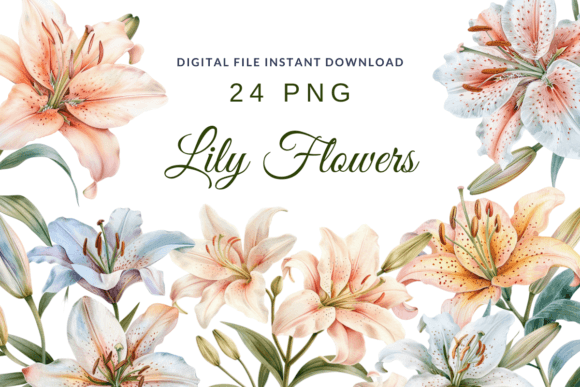
As a handmade business designer who’s shipped over 12,000 custom mugs, planner stickers, and seasonal gift tags since 2018, I opened Watercolor Lilies Flower Lily Clipart expecting soft elegance—and got exactly that. The first impression? A breath of spring air: delicate petals with subtle pigment bleed, gentle granulation, and that unmistakable watercolor authenticity—not flat digital fill, but real painterly texture. It leans feminine and refined without feeling fussy, elegant without being stiff, and artisanal without sacrificing versatility. If your ideal customer is someone who chooses linen napkins over plastic, journals over apps, and handwritten notes over texts—this clipart speaks their language.
I pulled Watercolor Lilies Flower Lily Clipart straight into Cricut Design Space while prepping for our spring Mother’s Day collection: custom ceramic mugs, kraft gift tags, and pastel-toned tote bags. Right away, the transparent-background PNGs dropped in cleanly—no white halos, no jagged edges. That’s huge. So many “watercolor” clipart sets claim transparency but leave ghosting or anti-aliasing fuzz. Not here. Each of the 24 PNG files holds up at full size and scales down smoothly for planner sticker sheets or tiny vinyl accents on enamel pins.
Where This Clipart Shines in Real Crafting Workflows
Watercolor Lilies Flower Lily Clipart isn’t just pretty—it’s purpose-built for hands-on making. Here’s where it delivers:
- Cricut & Silhouette projects: Cut clean from vinyl or iron-on for t-shirts, mugs, and tumblers—especially when layered over light backgrounds. I tested one lily as a single-layer cut on matte white vinyl for a small-batch mug run; it held fine detail even at 2.5 inches tall.
- Sticker design & printable products: Perfect for printable wall art bundles, greeting card suites, and planner sticker packs. The soft edges blend beautifully into hand-drawn layouts and pair naturally with serif fonts like Playfair Display or gentle script fonts like Pacifico.
- Sublimation design & print-on-demand: At 300 DPI, these PNGs hold crispness on ceramic, polyester, and coated paper—no pixelation on large-format prints or sublimated totes. I placed one lily across a full 8×10 printable art file and printed it on premium matte cardstock: zero loss in bloom definition.
- Handmade packaging & branding: Used two lilies as corner accents on thank-you cards and product labels—elegant but not overwhelming. They reinforce a cohesive, nature-inspired brand voice without needing custom illustration work.
- Seasonal craft bundles: Paired effortlessly with vintage-style “Spring Blooms” and “Mother’s Day Keepsake” digital product bundles. Its timeless palette (soft mauves, sage greens, cream whites) avoids trend fatigue—still fresh for Easter, bridal showers, or June weddings.
Where to Use It Thoughtfully—Not Just Automatically
Even beautiful assets need context-aware use. Here’s what I watched for:
- Avoid ultra-fine cuts: While most lilies have clear outlines, a few include wispy stamen details too thin for reliable vinyl weeding below 1 inch. For small sticker sheets (under 0.75”), I simplified by tracing the main petal shape in Design Space instead of cutting the full file.
- Test contrast on dark products: That delicate watercolor wash fades slightly on navy or charcoal mugs. I boosted saturation by 10% in Canva before exporting for sublimation—just enough to preserve softness while ensuring visibility.
- Layering caution: Don’t stack multiple lilies tightly in layered vinyl projects (e.g., multi-color t-shirt designs). The overlapping transparency can mute color depth. Instead, use one lily as a focal point, then add clean line-art leaves or geometric borders for balance.
- Small-scale readability: On 0.5” round stickers, the inner details blur. For mini sticker sheets, I used only the simplest lily silhouette—cleanest outline, least internal texture.
Practical Crafter Notes You’ll Actually Use
This isn’t theoretical—I ran Watercolor Lilies Flower Lily Clipart through my full pre-launch checklist:
- Test before selling: Printed one lily on my Epson ET-8500 at actual product size—checked for banding, color shift, and bleed. Passed.
- Confirm commercial license: Verified the included license permits use in physical handmade goods sold on Etsy, craft fairs, and local markets—yes, with no attribution required.
- Preview transparency: Dropped each PNG onto black and white mockups in Photoshop. No edge artifacts. No hidden background pixels.
- Resize smartly: For tumbler wraps (9” height), I scaled one lily to 4.5” tall—still razor-sharp. For 3×4” gift tags, 2.25” was ideal: prominent but not dominant.
- Pair intentionally: With serif fonts for vintage charm, sans-serif for modern minimalism, and script fonts for romantic stationery. Avoid heavy display fonts—they compete with the lily’s organic flow.
- Mockup early: Placed the largest lily on a real ceramic mug mockup (not just a flat template) to assess visual weight and negative space. Adjusted placement to sit just above the handle—not centered, which felt static.
What makes Watercolor Lilies Flower Lily Clipart more than just another graphic design asset? It bridges aesthetic intention and production practicality. It’s not just “illustrations”—it’s a ready-to-deploy element that fits into your workflow, not around it. Whether you’re building a cohesive Etsy product line, designing for a local craft fair booth, or fulfilling a custom order for a wedding planner, this set saves hours of illustration time while keeping your handmade business authentically yours.
If you create printable designs, sublimation products, or physical goods rooted in quiet beauty—not loud trends—Watercolor Lilies Flower Lily Clipart earns its place in your core design bundle. It’s the kind of graphic that doesn’t shout, but makes people pause, smile, and reach for their cart.