Axe SVG Bundle: Rustic, Rugged & Ready for Real Embroidery
First Impressions: That Lumberjack Vibe—But Does It Stitch Clean?
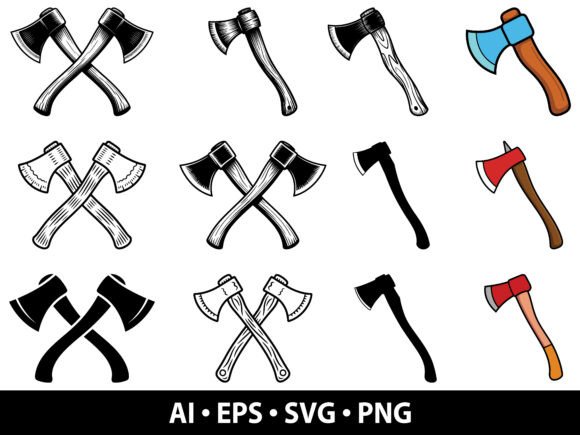
Opening the Axe SVG Bundle felt like stepping into a well-worn workshop—smell of pine resin implied, not required. These aren’t cartoon axes or stylized icons; they’re illustrations with weight, grain, and intention: crossed axes with subtle woodgrain hints, vintage hatchets with curved handles, forestry tools rendered with just enough detail to feel authentic—not fussy. The mood is grounded, masculine-adjacent but not exclusionary, nostalgic without leaning into kitsch. For embroidery designers, that’s promising—but also a quiet warning: rustic doesn’t mean forgiving. I immediately asked myself: *Will those fine axe-head contours hold up at 3” tall on a cotton tote? Will the negative space between crossed blades fill cleanly—or turn muddy under dense satin stitch?*
Real Project Test: A Custom Embroidered Canvas Tote for a Local Timber Co-op
I pulled one of the simpler crossed axe designs (no text, no tiny flourishes) and digitized it as a machine embroidery design for a 12 oz natural canvas tote—exactly the kind stocked by small-batch boutiques and craft fairs. This wasn’t a mockup. It was a real order: 25 units, deadline in five days. The Axe SVG Bundle held up better than expected—but only because I treated it like raw material, not a finished embroidery file. I resized carefully (never stretching), added light underlay, adjusted stitch density to avoid puckering on stiff canvas, and used medium-cutaway stabilizer. The result? Crisp lines, confident negative space, and a tactile, handmade product that looked professionally stitched—not “designed on Canva and sent straight to hoop.” Customers noticed. One tagged the co-op in an Instagram story captioned *“This feels like it belongs in a cabin, not a shopping bag.”* That’s the value: authenticity translated through thread.
Where It Shines (and Where It Needs Extra Care)
The Axe SVG Bundle excels in mid-to-large scale applications where texture and character matter more than micro-detail:
- Embroidered patches — The bold silhouettes and clear outlines translate beautifully into sew-on or iron-on applique designs.
- Sweatshirt embroidery — Especially on heather grey or charcoal fleece, where the rustic tone reads warm and intentional.
- Aprons and tea towels — Paired with simple running stitch borders or minimal fill stitch, these axe graphics add craft credibility without overwhelming utility.
- Holiday embroidery — Think flannel shirts for lumberjack-themed Christmas gifts or baby embroidery on organic cotton onesies (use simplified versions only).
- Commercial embroidery for small shops — Boutiques selling outdoor gear, artisanal coffee, or heritage goods find instant brand alignment here.
But caution is needed in tighter contexts:
- Don’t force it into a 2” hoop on stretchy fabric—those curved axe handles will distort without precise tension control and cutaway backing.
- Avoid dense fill stitch on dark fabric unless you’ve tested thread color contrast thoroughly; some vintage hatchet details vanish if the top thread blends too closely with the base.
- Curved surfaces (like caps or pillow gussets) require careful placement—crossed axe layouts can skew visually if not centered with seam allowances in mind.
- Thin fabrics (baby swaddle muslin, lightweight linen) need lighter stitch density and possibly a tear-away + topping combo to prevent show-through or snagging.
What It Adds to Your Finished Product—Beyond the Obvious
This isn’t just about putting an axe on something. The Axe SVG Bundle quietly lifts perceived value. On an Etsy listing for personalized sweatshirts, it signals craftsmanship—not clipart. On a boutique’s kitchen towel line, it reinforces a cohesive, tactile brand story. For craft fair shoppers, it reads as “made with care,” especially when paired with natural fibers and earth-toned thread colors. And yes—it boosts buyer engagement: people pause longer on items with strong, legible graphic identity. That pause turns into questions, shares, and repeat visits. But none of that happens if the stitching looks hesitant or unclear. So treat the Axe SVG Bundle as design assets—not decoration. Refine it. Respect its scale. Let it breathe.
Practical Designer Notes Before You Hoop Up
Before committing to a full run—especially for client work or inventory—do these six things:
- Test on scrap fabric that matches your final substrate (canvas, fleece, cotton poplin, etc.). Not just once—try two stabilizer combos.
- Check thread color contrast in both natural and artificial light. What reads bold at noon may fade under café lighting.
- Review stitch density—especially in tight corners of axe heads and handle curves. Over-stitching = stiffness; under-stitching = gaps.
- Confirm hoop size compatibility. Some layouts span wider than standard 4x4 hoops—plan for re-hooping or use a larger frame.
- Inspect small details at actual stitch-out size. That delicate hatchet eye? Might need simplification for sub-3” applications.
- Verify licensing before selling finished items or digital embroidery files. Since this is categorized as Illustrations and Graphics, confirm whether commercial embroidery rights are included—or if you’ll need additional permissions for resale.
And one last note: try it in black-and-white mockups first. If the shape holds up without color, you’ve got a keeper.
Final Thought: A Solid Foundation, Not a Shortcut
The Axe SVG Bundle won’t replace thoughtful digitizing—but it gives you a strong, evocative foundation. It’s the kind of design asset that saves time without sacrificing voice. Used well, it helps craft businesses stand out with sincerity, not sameness. Just remember: great embroidery starts long before the needle drops. It starts with knowing what the design *does*, not just what it *is*. And this bundle? It does rugged. It does warm. It does real.