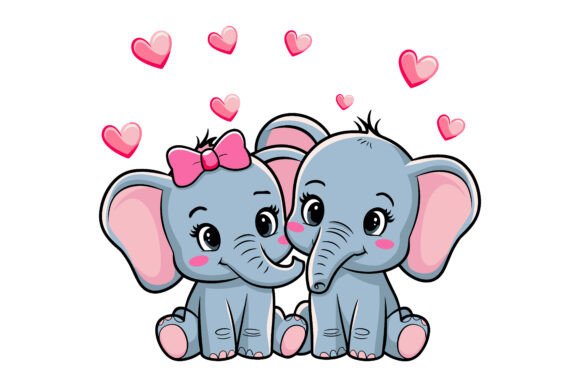
Cute Baby Elephant Vector
First Impressions: Soft, Sweet, and Stitch-Ready
Opening Cute Baby Elephant Vector feels like unboxing a quiet moment of joy—rounded ears, a gently curled trunk, eyes that suggest calm curiosity rather than cartoonish exaggeration. This isn’t a busy safari scene or a hyper-detailed zoological study; it’s a single, confident silhouette with breathing room built in. The lines are smooth but not overly simplified—there’s subtle contouring along the back and gentle tapering at the legs that gives dimension without demanding precision stitching. As an embroidery designer who’s stitched everything from intricate florals to minimalist monograms, I immediately saw its sweet spot: baby items, nursery decor, and soft-goods branding where warmth matters more than wow-factor.
Real Project Test: A Personalized Cotton Tote for a New Mom
I pulled Cute Baby Elephant Vector into my workflow for a custom embroidered cotton tote—intended as a shower gift. The client wanted something tender, gender-neutral, and timeless—not cutesy enough to feel dated in six months. I resized the vector to fit a 4” hoop, converted it to a machine embroidery design using standard fill and satin stitch zones (no applique needed), and ran a test on medium-weight quilting cotton with tear-away stabilizer. What stood out? The trunk’s curve held clean lines even at that scale, and the ear’s inner curve didn’t collapse into a blob—no stitch-pull distortion. Customers notice those small wins: when a finished product looks intentional, not “machine-made,” it elevates perceived value instantly.
Where It Shines (and Where to Pause)
- Custom apparel: Works beautifully on sweatshirts and baby onesies—its open shapes avoid dense fill stitch areas that can stiffen fabric. On a lightweight organic cotton onesie, it stayed soft after washing.
- Embroidered patch: Clean outer edge makes it ideal for heat-applied or sew-on patches. No jagged corners to fray during cutting or wear.
- Nursery decor & holiday embroidery: Paired with neutral thread (ecru, slate gray, or dusty rose), it reads as thoughtful—not loud. Perfect for a linen pillow cover or tea towel meant to last beyond baby’s first year.
- Etsy seller & small shop product: Its simplicity translates well across digital embroidery file previews, printable mockups, and lifestyle photos. Buyers intuitively “get” the use case—no caption needed.
But—and this is key—it’s not universally forgiving. On stretchy jersey or thin rayon, I’d add cut-away stabilizer and reduce stitch density slightly. On dark fabric, avoid light thread unless you’re layering underlay stitches; the design’s gentle curves need contrast to read clearly. And while it scales nicely down to ~3”, don’t push below 2.5” without checking small details: that tiny eye shape may vanish entirely in fill stitch, turning expressive into ambiguous.
Design Integrity Meets Commercial Reality
As a craft business owner, I judge designs not just by aesthetics—but by how they protect my time, reputation, and repeat sales. Cute Baby Elephant Vector delivers consistency: no hidden overlaps, no stray anchor points, no nested layers that confuse embroidery software. That means fewer “why won’t this stitch?” moments mid-production. For Etsy sellers bundling digital embroidery files, this kind of clean Illustrations asset builds trust—customers download once and stitch cleanly, leading to better reviews and fewer support requests.
It also supports brand consistency. If your shop leans into earthy, handmade, slow-craft energy, this elephant reinforces that voice. It doesn’t scream “trend”—it whispers “care.” That subtlety pays off in personalized gifts: grandparents ordering embroidered blankets, boutique owners curating baby collections, or wedding guests gifting monogrammed elephant + initials towels. People remember how something *feels*, not just how it looks—and this design feels considered.
Practical Embroidery Designer Notes
- Always test on scrap fabric first—especially if pairing with textured fabrics like terry cloth or linen blends.
- Check thread color contrast before finalizing. A pale gray elephant on oatmeal canvas reads softer than black on white—but both work, depending on your product’s tone.
- Review stitch density in your embroidery software. If fill areas look overly heavy, reduce density by 10–15% for breathable results on apparel.
- Confirm hoop size compatibility before digitizing. While the vector itself is scalable, your machine’s max hoop limits what you can stitch in one pass.
- Inspect small details at actual stitch size—zoom in on the eye, trunk tip, and ear base. If they blur or merge, simplify manually before stitching.
- Test in black-and-white mockups to assess visual weight and recognition at thumbnail size—critical for Etsy listings and social ads.
- Use proper stabilizer for your fabric type: tear-away for stable wovens, cut-away for knits, and water-soluble for caps or layered garments.
- Verify licensing before selling finished products or digital embroidery files. Since Cute Baby Elephant Vector is part of an Elephant Silhouette SVG Bundle for Cricut and Elephant Illustration Vector Collection, confirm whether commercial use is included for physical goods and digital resale.
Final Thought: Not Just Cute—Consistently Useful
There are dozens of elephant graphics online. What makes Cute Baby Elephant Vector stand out isn’t novelty—it’s reliability. It’s the kind of Graphics asset that quietly earns its place in your go-to folder: for baby embroidery that doesn’t shout, for holiday embroidery that feels personal, for commercial embroidery projects where clarity and charm matter equally. It won’t replace your signature floral motif—but it might become the gentle, trusted accent that keeps customers coming back for that next thoughtful, handmade product.